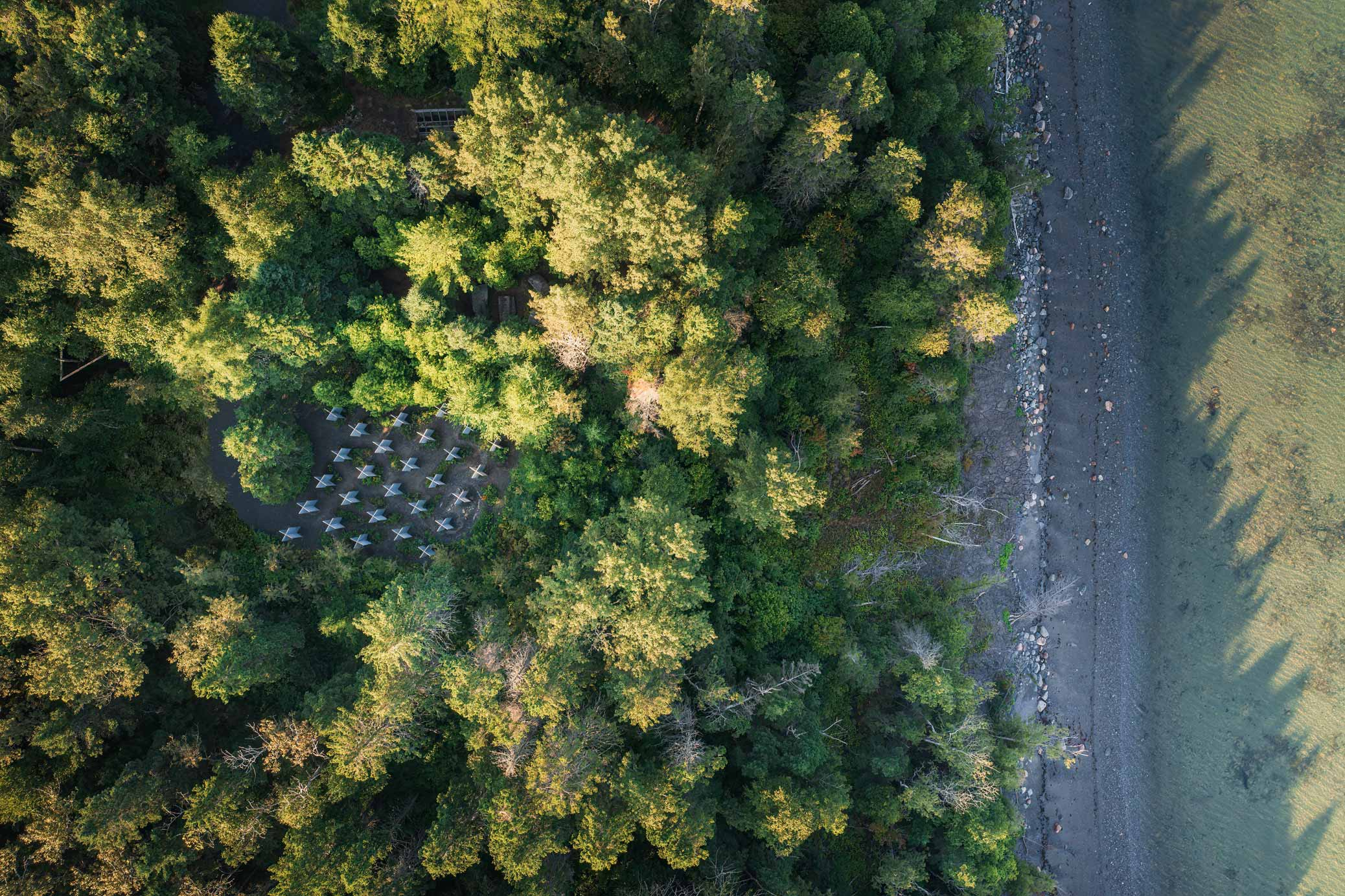
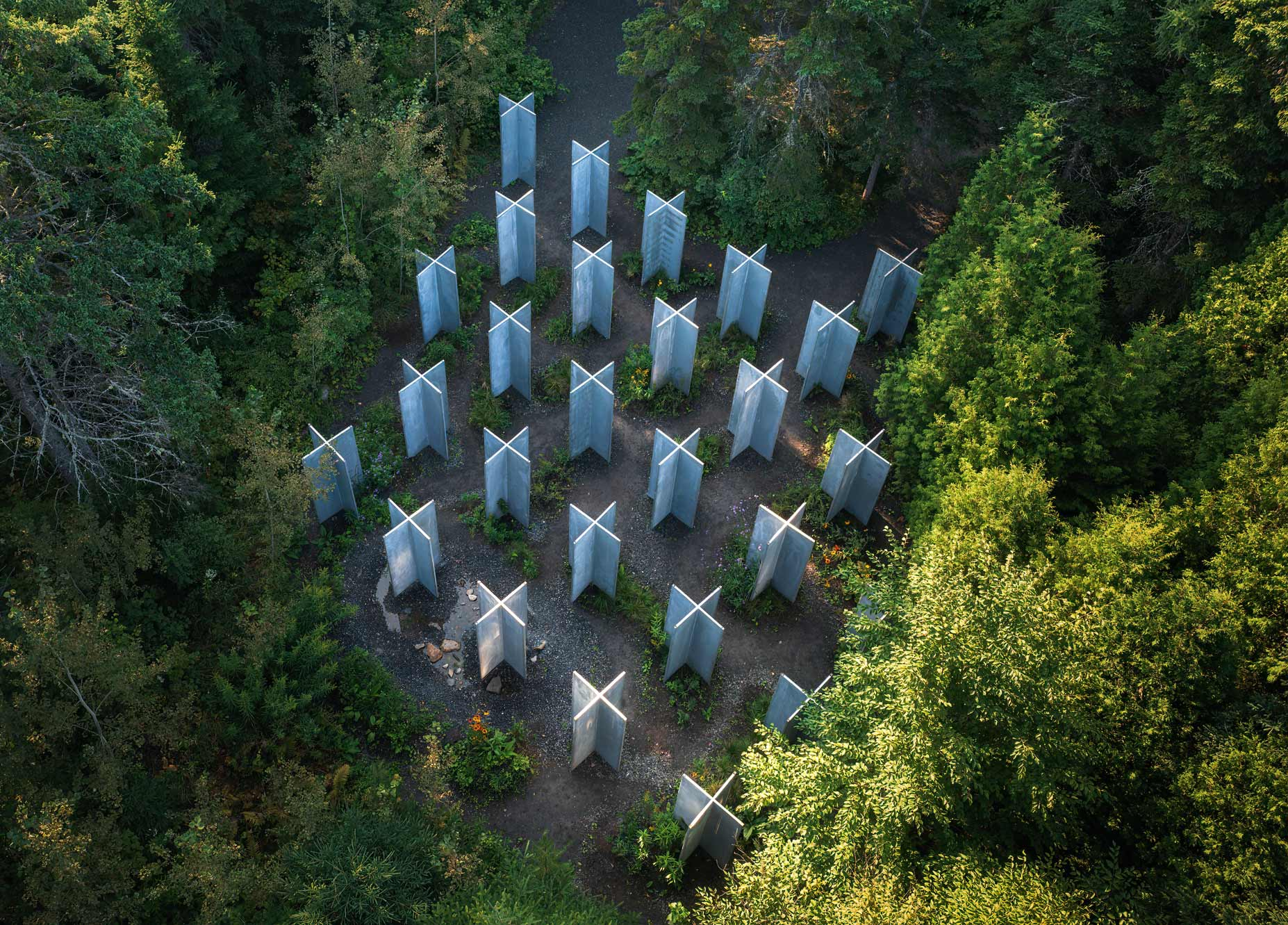
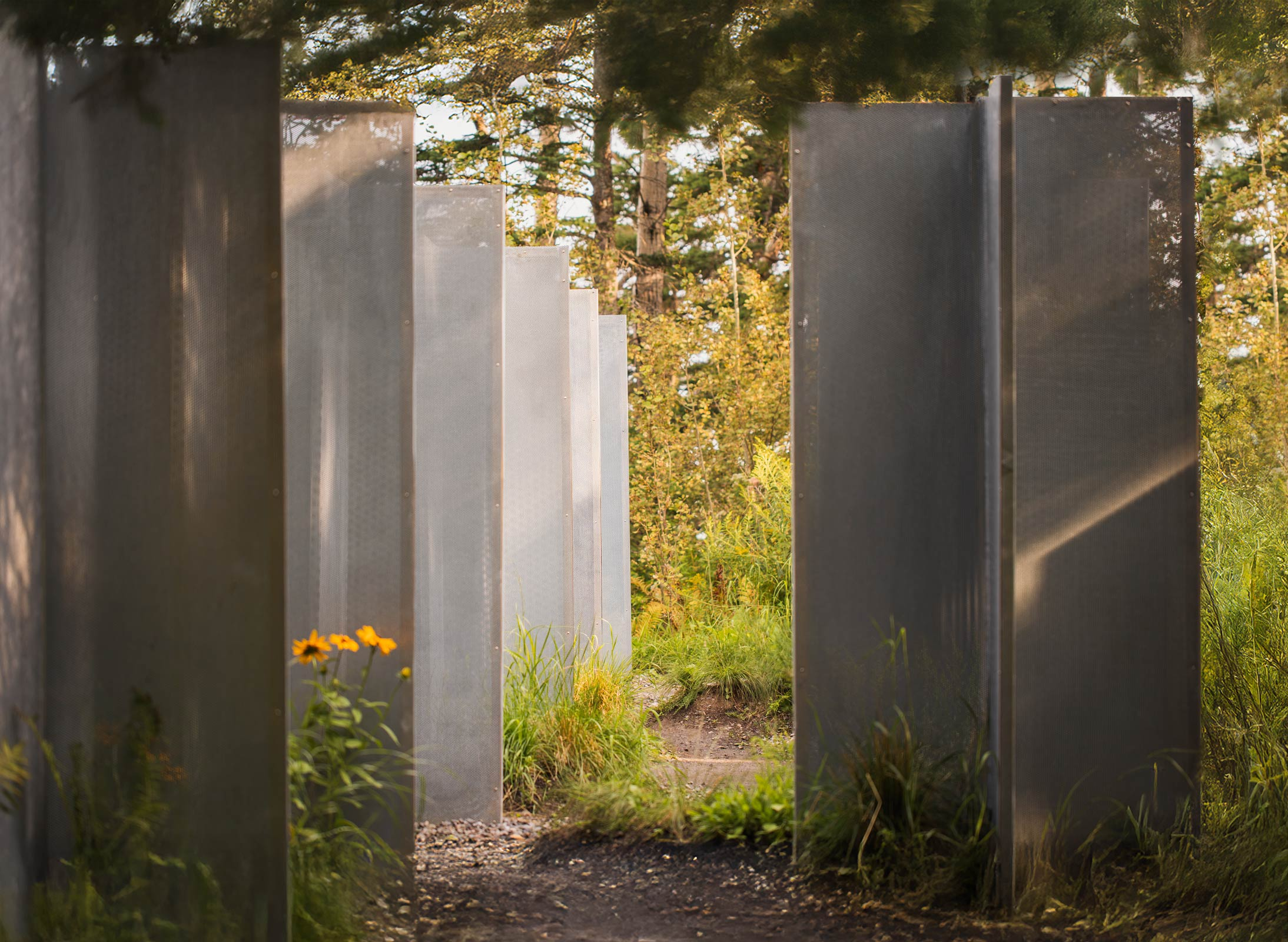
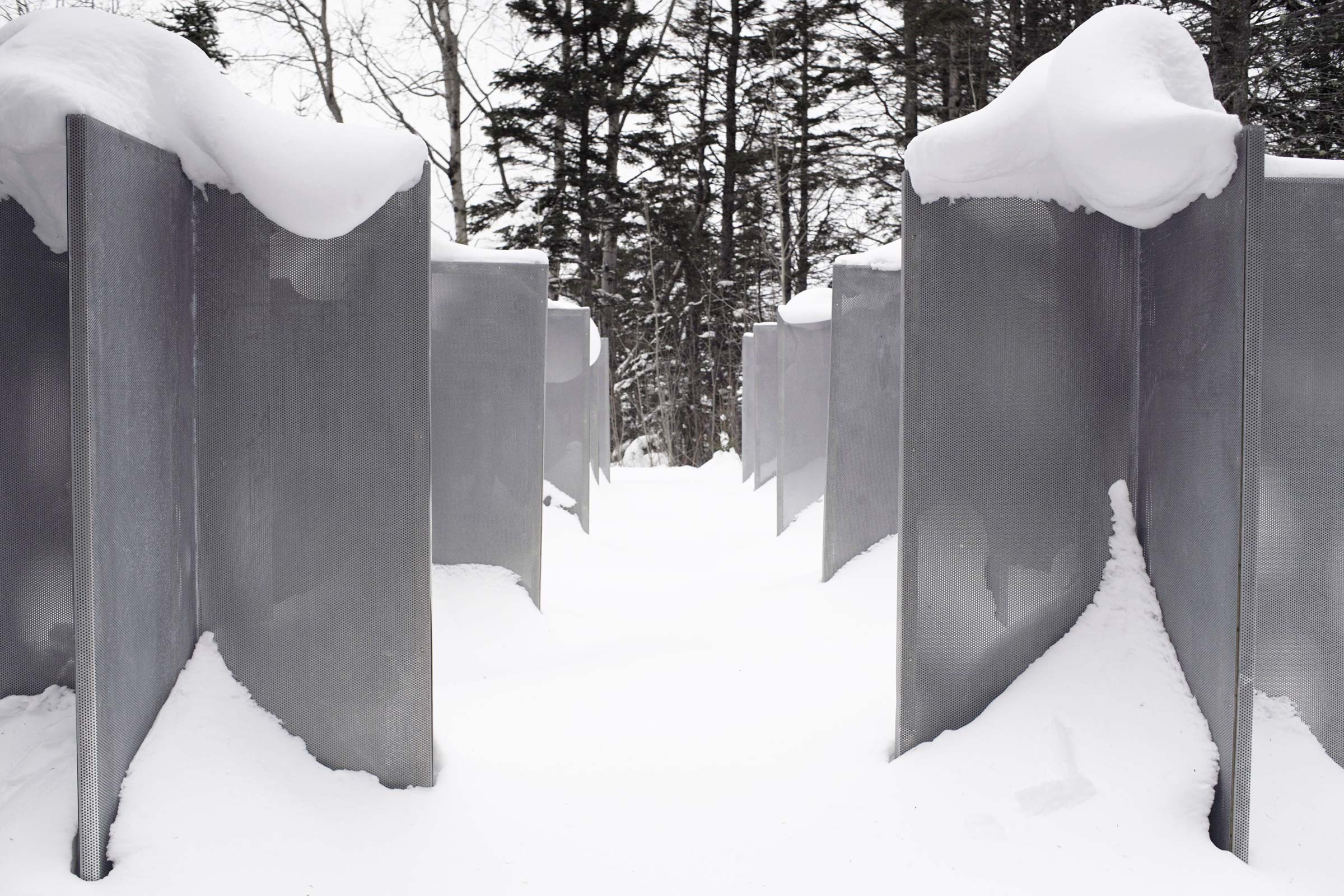
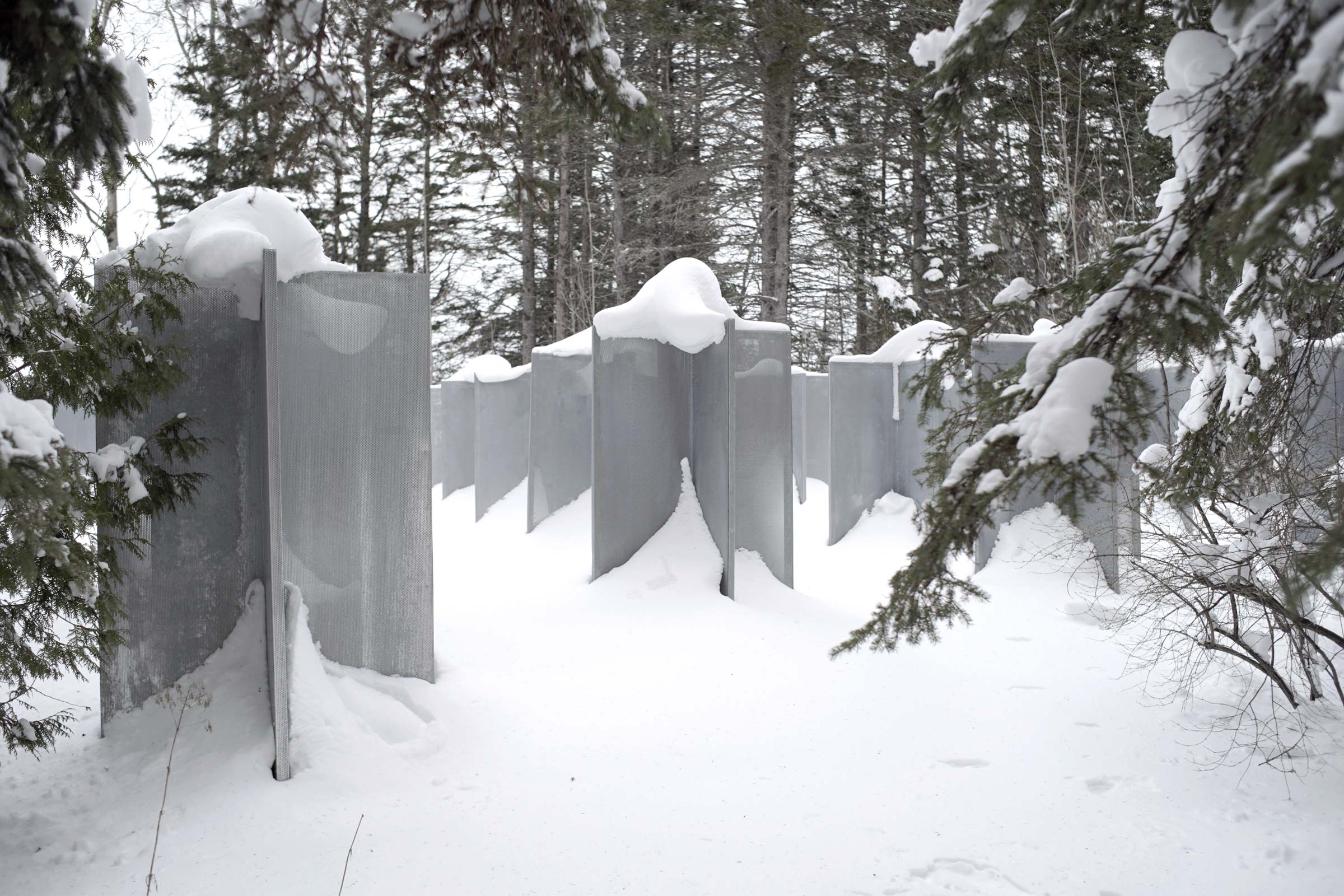
Superstrata is an immersive installation that explores the tension between human rationality and the unruly force of nature. The project pivots around the idea that humans seek to understand and control the world through systems, grids, and hierarchies, while nature operates through complexity, non-linearity, and constant transformation.
Geological maps are the primary reference in the materialization of this concept. Their stratigraphic lines reveal nature’s layered logic and continuous processes of change, resisting fixed boundaries. In contrast, humans analytically superimpose an abstract grid onto the land, an attempt to order what cannot be fully contained.
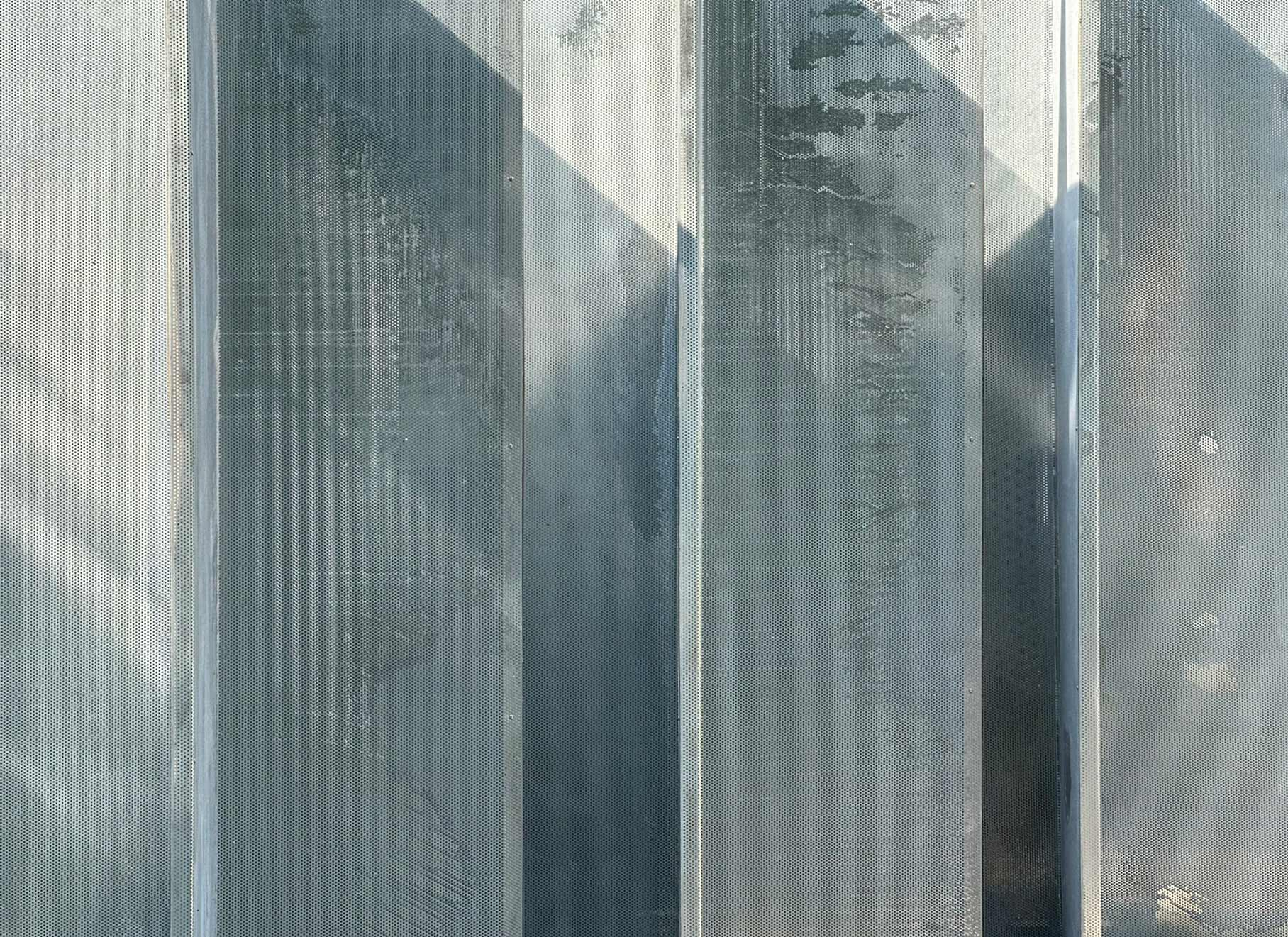
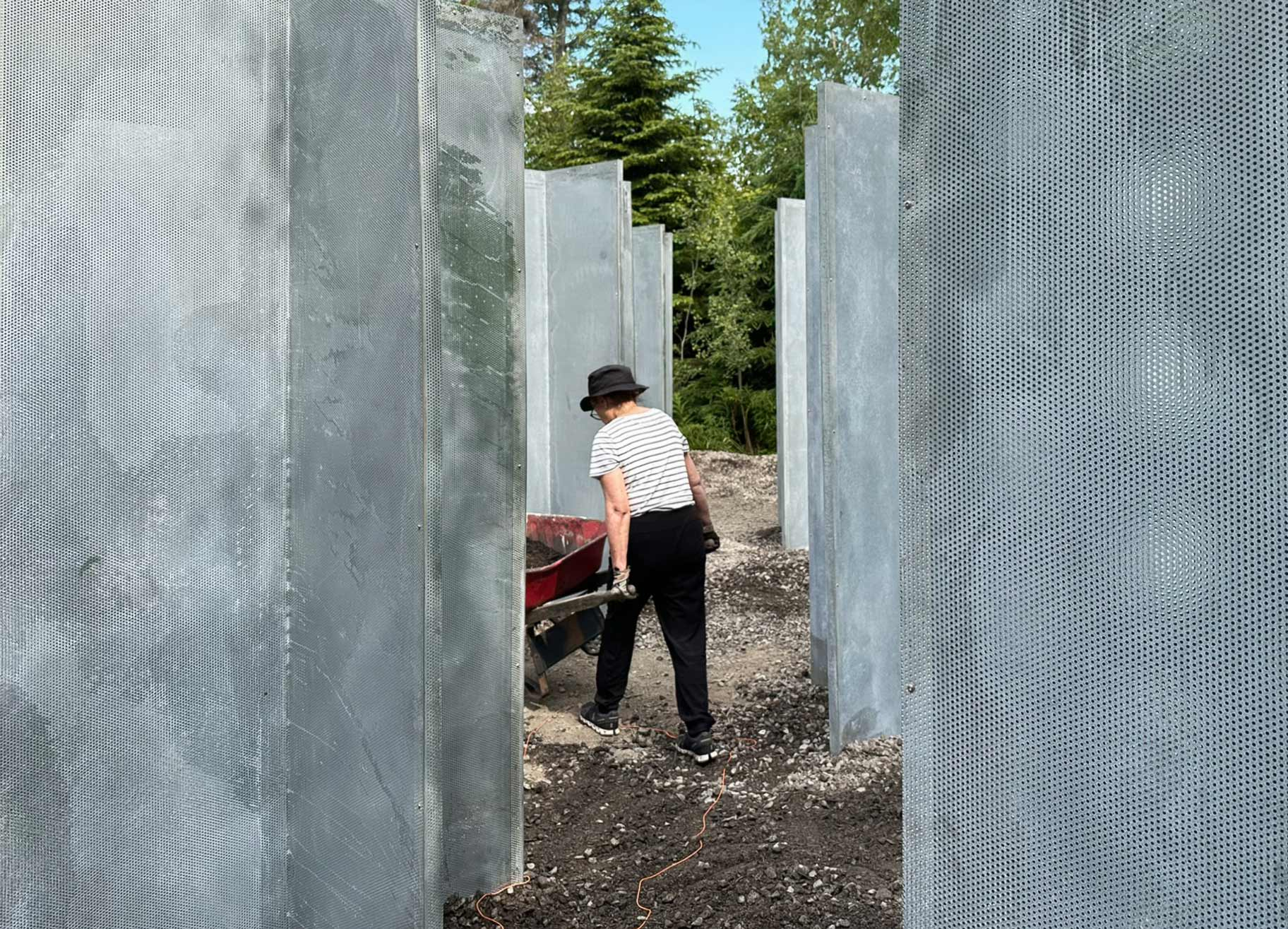
Visitors move through this permeable grid, where intersections of longitudinal and latitudinal lines gain spatial form. The perforated metal structure represents the limits of human logic: present and tangible, yet ultimately unable to restrain the vitality of natural matter. Nature escapes the grid, exposing the creative failure of rigid systems.
Rather than domination, Superstrata proposes listening. The installation invites visitors to experience humility, to be captivated rather than overwhelmed, and to rethink how we inhabit the landscape by embracing its complexity instead of simplifying it.
team:
Matteo Fontana
Mattia Mattiuzzi
built with the support and help of:
volunteers, botanical and technical staff of Les Jardins de Métis / Reford Gardens
date:
June 2024
location:
Grand-Métis, Québec, Canada
press:
Jardins de Métis Reford Gardens / Superstrata
CBC / Wild art blooms in one of the continent's northernmost botanical gardens
Archinect / Check out the six new landscape art installations now on show at the International Garden Festival
Formes / Les lauréats 2024 du Festival international de jardins
Kollectif / Winning projects of the 25th International Garden Festival: “Ecology of Possibilities”
Canadian Architect / Program Unveiled for International Garden Festival’s 25th Anniversary
Designing ways / Opening of the 25th International Garden Festival, p.62-69
